
Don’t Ignore Native Extensions: Why Squarespace’s Curated E-Commerce Ecosystem Matters
If you’ve spent any time comparing website platforms, you’ve probably noticed something right away. Squarespace does not have hundreds or thousands of apps the way Shopify does.
And that is not a weakness.
It’s a deliberate design decision, and for many site owners and designers, it’s one of the reasons Squarespace works so well.
Squarespace takes a curated approach to extensions, especially when it comes to ecommerce. Instead of offering an open marketplace with endless add-ons of varying quality, Squarespace focuses on a smaller set of tools that are vetted, supported, and designed to integrate cleanly with the platform.
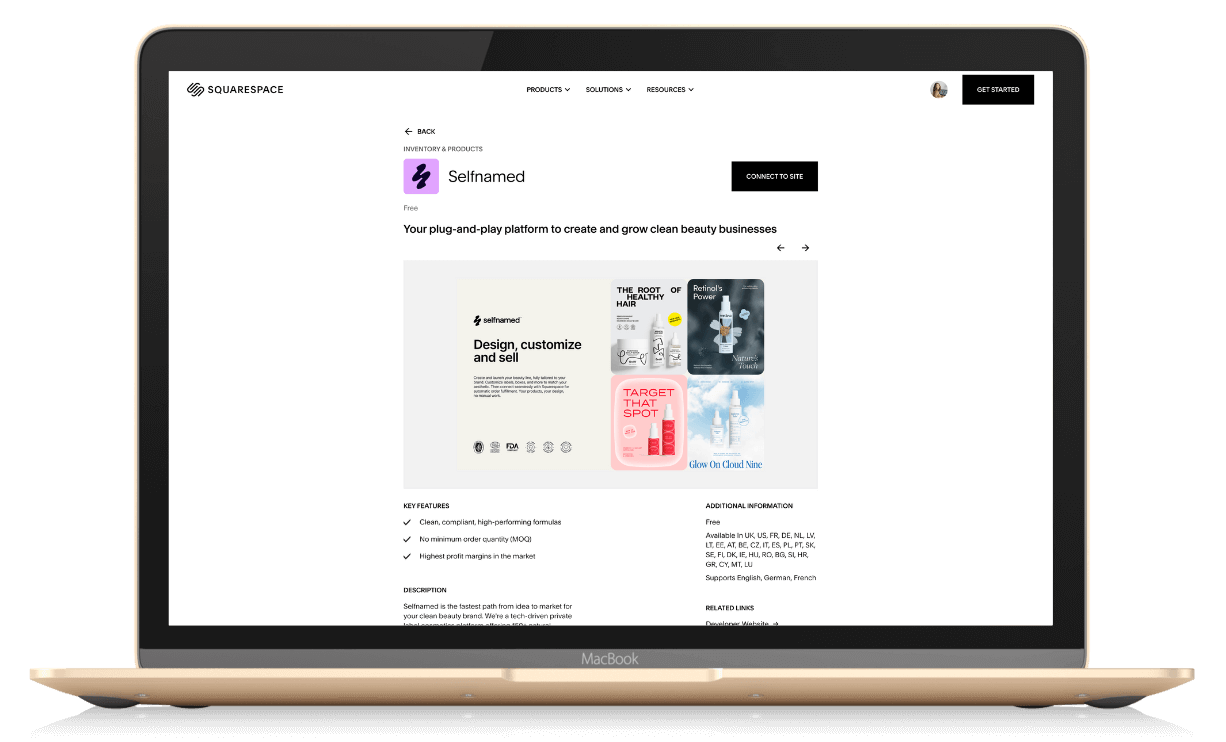
As Squarespace continues to expand its e-commerce capabilities, those native extensions are becoming more important. One of the newest additions to that ecosystem is Selfnamed, a private-label clean beauty platform now integrating with Squarespace.
Squarespace Doesn’t Have Hundreds of Apps, and That’s the Point
Platforms with massive app marketplaces often frame choice as a benefit. In practice, that choice comes with tradeoffs.
More apps usually means:
More overlapping functionality
More ongoing maintenance
More support issues when tools conflict
More decisions pushed onto the site owner
Squarespace has always taken a different approach. Its extension ecosystem is intentionally smaller, with tools that are reviewed and approved to work within the platform’s structure. That means fewer surprises after launch and fewer situations where something breaks because of an update you didn’t even know happened.
For business owners building their own sites, this approach reduces cognitive load. You don’t have to assemble a complex tech stack just to sell a product.
For designers, it means recommending tools with confidence. When something is a native Squarespace extension, you know it’s designed to work with Squarespace’s ecommerce, checkout, and product system rather than bolted on afterward.
That context matters when evaluating new tools.
Why Native Extensions Matter More as E-commerce Grows
E-commerce on Squarespace has matured significantly over the past few years. Features like subscriptions, digital products, flexible checkout, and improved inventory tools have made it a viable option for many small businesses.
As that functionality grows, extensions play a supporting role. Native extensions are not meant to replace core features. They are meant to extend them in focused ways without disrupting the overall experience.
A good native extension should:
Feel like part of Squarespace, not a workaround
Reduce complexity rather than add to it
Solve a specific problem for a specific type of business
That’s the lens worth using when looking at newer extensions, including Selfnamed.
Introducing Selfnamed as a New Squarespace E-Commerce Extension
Selfnamed is a private-label product platform that allows brands to launch and sell beauty products quickly, without managing inventory or fulfillment.
Selfnamed specializes in clean beauty, with a focus on skincare and personal care products. Instead of sourcing manufacturers, storing inventory, or shipping orders manually, sellers choose products from Selfnamed’s catalog, customize the branding and packaging, and sell them through their own website.
With the Squarespace extension, Selfnamed products can be connected directly to a Squarespace store, allowing orders placed on your site to flow through to fulfillment automatically.
This matters because it removes a common barrier for small businesses that want to sell physical products but do not want to operate like a warehouse.

How Selfnamed Works in Practice
At a high level, the Selfnamed workflow looks like this:
You choose products from Selfnamed’s catalog.
You customize labels and packaging to match your brand.
You connect those products to your Squarespace store through the native extension.
Customers order directly from your site.
Selfnamed handles production, packaging, and shipping.
From the customer’s perspective, they are simply shopping on your Squarespace site. From your perspective, you are not managing inventory, fulfillment logistics, or shipping workflows. Win, win, win.
For DIY Websites
Many Squarespace users are solopreneur service-based business owners. Aestheticians and facialists often reach a point where they want to add physical products but feel stuck on how to do it without overcomplicating their business.
Common concerns include:
Not wanting to invest heavily in inventory upfront
Not having space to store products
Not wanting to manage shipping and returns
Wanting products to feel aligned with their brand
Selfnamed addresses those concerns by keeping product creation and fulfillment behind the scenes while letting the website remain the primary point of sale.
For someone already using Squarespace, the native extension matters. You are not managing a separate storefront or sending customers to a third-party checkout. Everything happens within the site you already have.
That consistency matters for trust and for conversion.
For Designers Building E-commerce Sites
From a designer’s perspective, e-commerce projects often fail not because of design but because clients are comfortable managing the backend.
Native extensions help reduce that risk.
When a product fulfillment system is integrated directly into Squarespace, clients are less likely to get stuck juggling dashboards, syncing issues, or manual workarounds.
Selfnamed is particularly relevant for designers working with clients in industries where branded products make sense but full-scale ecommerce operations do not. Think wellness brands, beauty professionals, or even content creators.
Being able to say, “This works directly with Squarespace and does not require inventory management,” is a meaningful selling point.
What the Setup Experience Looks Like
The Selfnamed setup process is designed to be straightforward:
You create a Selfnamed account and explore their product catalog.
You customize branding and packaging for the products you want to sell.
Once connected via the Squarespace extension, products sync with your store.
This approach aligns with how Squarespace users typically expect tools to work. There is no need to rebuild your site structure or redirect customers elsewhere to complete a purchase.
Curated Tools Reduce Long-Term Friction
It can be tempting to judge a platform by how many tools it offers. In practice, the better question is whether those tools help you run your business more smoothly over time.
Squarespace’s curated extension ecosystem reflects a philosophy of restraint. Not every possible feature is available, but the ones that are tend to be well thought out and well integrated.
Selfnamed fits into that philosophy. It solves a specific problem for a specific type of seller and does so without requiring a complex technical setup.
For DIY site owners, this means fewer decisions and fewer moving parts.
For designers, it means recommending solutions that clients can realistically manage.
Final Thoughts
Native extensions are easy to overlook, especially if you are used to platforms with massive app marketplaces. But Squarespace’s approach is intentional, and it rewards users who value simplicity, stability, and cohesion.
Selfnamed is a good example of how Squarespace’s ecommerce ecosystem is expanding without becoming overwhelming. It offers a way to sell branded physical products while keeping the website, checkout, and customer experience firmly inside Squarespace.
If you are already using Squarespace and considering physical products, this is an extension worth understanding.
Get started by connecting Selfnamed to a Squarespace website.